

Why property managers should pay attention
Walk through a parking structure, rooftop deck, or commercial plaza, and you’ll likely notice a long, straight gap running through the concrete. Is it a crack—or was it put there on purpose?
It may be an expansion joint, a planned separation that gives building materials room to move. For property managers, understanding these joints can help explain why a small maintenance issue sometimes leads to a much larger repair.
Buildings move—and expansion joints make room
Concrete, steel, and other building materials expand as temperatures rise and contract as they cool. Structures can also experience movement from settling, moisture changes, wind, and seismic activity.
Expansion joints accommodate movement between sections of a structure. Without properly designed joints, that movement can place stress on surrounding materials, contributing to cracking and damage.
The joint creates room for movement. The sealant or joint system installed within it helps maintain protection as the gap changes size.
Where you’ll find expansion joints
On commercial properties, expansion joints may appear in parking structures, rooftop and plaza decks, balconies, walkways, exterior walls, and between sections of larger buildings. Movement joints are also common in sidewalks and paved areas.
Not every line in concrete is an expansion joint. Some are control joints designed to manage where concrete cracks, while others mark a break between concrete placements. Knowing which type you’re looking at matters when planning repairs.
More than a line of caulking
The materials inside an expansion joint depend on its location, expected movement, and exposure. A sealed joint may include:
- Flexible sealant: Helps keep water and debris out while accommodating the joint’s designed movement.
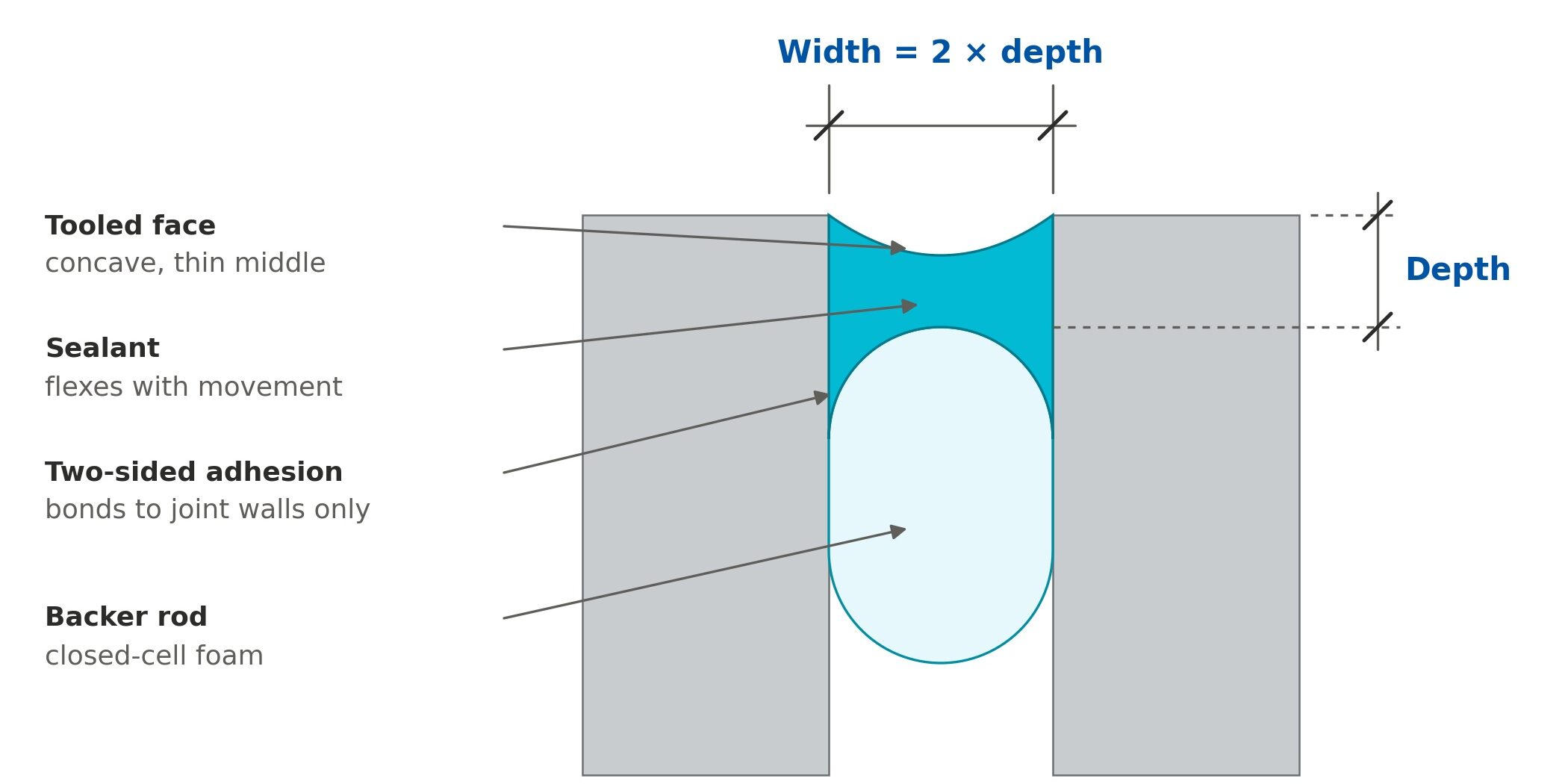
- Backer rod: Supports the sealant, controls its depth, and helps establish the shape it needs to perform properly.
- Waterproofing connections: On decks and other exposed areas, the joint system may connect with waterproofing that protects occupied spaces or structural components below.
Some applications use specialized expansion joint assemblies rather than a simple sealant joint. The repair needs to suit the system and its movement requirements—not just fill the visible gap.
What happens when a joint fails?
Expansion joint systems require maintenance. Sun exposure, weather, traffic, chemicals, and repeated movement can deteriorate sealants and other components over time.
When a joint loses its seal, water can enter areas that are difficult to see or access. In a parking structure, continued water intrusion can contribute to corrosion of embedded steel, concrete deterioration, and spalling—the breaking or flaking away of concrete.
What begins as damaged joint material may eventually require repairs to the surrounding concrete and waterproofing. Identifying the issue early gives property teams more time to evaluate the cause and plan the appropriate work.
What to look for during property walks
You don’t need to diagnose the problem yourself. Start by looking for changes:
- Sealant that is cracked, peeling, or pulling away from the joint edges.
- Missing, damaged, or displaced joint material.
- A gap that appears wider or more uneven than before.
- Water staining or active leaks beneath decks and parking structures.
- Rust-colored staining or cracking near the joint.
- Standing water or previous repairs that are failing again.
These conditions don’t all point to the same cause, but they deserve a closer look. Photograph the area, note its location, and record whether leaks or staining appear after rain. That information can help your repair team evaluate what’s happening.
Make expansion joints part of routine maintenance
Expansion joints are easy to overlook when they’re working properly. Including them in routine property inspections helps your team recognize deterioration before water intrusion spreads to surrounding areas.
An effective repair starts with understanding the joint, its movement, and the systems around it. Simply covering deteriorated material may leave the underlying issue unresolved.
At Coastal CW, we help commercial property teams inspect, maintain, and repair expansion joints, sealants, waterproofing, and protective coatings.
Seeing damaged joint material or water staining at your property? Contact Coastal CW to discuss an evaluation and the next steps for repair.